When we first started homeschooling seven years ago, I worried a lot about being the one in charge of my kids’ education. How would I teach them everything they needed to know and make sure there were no gaps in their learning? What about socialization and extracurricular activities? Would I be patient enough to commit to this huge responsibility, day in and day out?
And then there were the seemingly infinite number of things to keep track of – the grades, the curriculum, the state requirements. It all just seemed like a lot, possibly too much, to handle.
But despite all the uncertainty, my husband and I decided to move forward, mostly because our daughter was so eager to be homeschooled. Neither of us had planned on homeschooling, and we weren’t of the mindset that homeschooling is the ideal form of education for all people, everywhere. But for our family, at that point in time, it seemed like what we were being called to do. And now, seven years later, it still does.
Those worries never go away, but our focus has shifted through the years. While we certainly still want our kids to study all the material they need to during their homeschool years, it’s much more important to us that they are fluent in the following subject matter as they set off into the world.

1. Life
“Our aim in education is to give a full life. We owe it to them to initiate an immense number of interests. Life should be all living, and not merely a tedious passing of time; not all doing or all feeling or all thinking – the strain would be too great – but, all living; that is to say, we should be in touch wherever we go, whatever we hear, whatever we see, with some manner of vital interest.” ~Charlotte Mason [emphasis mine]
The temptation to tune out the world around us is always near at hand. Mindless scrolling, social media avatars, constant background noise, AI-generated images – all these edifices can quickly crowd out the reality that is right in front of us, day in and day out: the beauty of nature, the demands of our commonly shared, basic human needs, the love communicated in a smile, the warmth of a hug.
Even the little spats and quarrels between family members, so different from the impersonal domain of cyberbullying or internet trolling, are reminders of reality when seen in this light.
Our primary goal as educators is to teach our children to live, to be in touch with what is real. This means they must seek out the humble lessons that dwell under their roof and also go on great adventures into the unknown. This does not mean they simply take a “life skills” or “home economics” class (although both are worthy efforts). The real goal of a child’s education is to teach them to encounter reality – to live, to encounter the world – and this must be accomplished in a smaller, more subtle way.
What It Looks Like:
- Teaching through experience via field trips and activities in the real world (a few examples: stargazing to learn the constellations, experiencing a play on stage alongside a reading, finding seashells on the beach and identifying them in a nature guide).
- Observing the natural world on a daily basis – for example, tracking the stars every night or observing and sketching a particular tree for an entire year
- Formal assignments that are based on observation of the world. For example, as a prompt for a freely written paper for grades 3-5: “What steps has your baby brother taken in the last two months that show he is growing up?”
- Avoiding specialization whenever possible. “Initiate an immense number of interests,” as Charlotte Mason says, knowing that in the long run, many of these will collide and even complement each other. Be an amateur in many pursuits, rather than an expert in few.
- Mastering – and learning to enjoy – basic life skills like cooking, cleaning, caring for younger siblings, gardening, etc. Prioritizing these skills as an essential part of learning (so if you need to take a day off of formal “school” to catch up on housework, you can still call it a school day).
- Traveling to new places and encountering the local customs as best we can.

2. Leisure
“Repose, leisure, peace, belong among the elements of happiness. If we have not escaped from harried rush, from mad pursuit, from unrest, from the necessity of care, we are not happy.” ~Josef Pieper
School should not be a source of anxiety and stress, but sadly it is for so many students, not to mention educators. In some ways, this is even thought of as a good or at least necessary thing. Students are pushed to perform, to excel, to work hard in order to be best. They are incentivized with scholarships, special awards, and that vague sense of prestige that comes with being top of the class. If their success results in anxiety, stress, or depression, it’s thought of as par for the course. After all, isn’t that the “real world” is like?
Now to be clear, we don’t believe competition and hard work are always bad, which is why we seek out ways for our children to work and compete in healthy environments. However, without time for rest, quiet recollection, and peace of mind, the work becomes a source of unhappiness, anxiety, and restlessness.
This is well-accepted advice in the world of physical training. Even the most advanced athletes know rest days are crucial for growth. Without rest, burnout is right around the corner. In this regard, the work of the body is a great analog for the work of the mind. Our minds need rest as much as our bodies do, if not more.
Our culture is good at teaching the work side of things, but the leisure part? Not so much.
By “leisure” I don’t simply mean “relaxation”, “vacation”, or simply being “laid-back”, though. In a way, leisure could be thought of as intense by today’s standards, because it allows the mind to dwell on what it is learning – to contemplate it. But contemplation takes time and patience.
For example, I love that the geography curriculum I am using with my 3rd grader and kindergartener includes the more leisurely realms of art, cooking, and music for each country we study. I’ll also admit that I’m sometimes inclined to skip these sections. Why? Because they take too long and require too much effort. Ironically, the things that are most leisurely (in the true sense of the word) and allow us to enter into the spirit of whatever subject we are studying take a lot of time and require a lot of patience.
But when I step back and think about it, I know my child is much more likely to remember making macarons and beef Bourguignon while listening to music by French composers we’ve studied than filling out a workbook page called “Facts About France.” And in a funny way, he will actually know a lot more about France by doing these fun and leisurely activities than he would by simply doing bookwork.
These leisurely activities are what the mind longs for. Leisure completes learning. Without it, school becomes work for the sake of work, for students and their teachers.
What It Looks Like:
- Less emphasis on deadlines and grades
- Freedom to move and change environment throughout the day
- Group subjects with siblings, parents, and peers to encourage dialogue and conversation
- Emphasis on beautiful, ordered surroundings (as much as possible in a family with 7 kids!) to encourage focus and calm
- Regular time for quiet activity and rest
- A leisurely approach to planning (for example, our “fika” time where I lay out lesson plans with my kids and we discuss what they are enjoying/struggling with – always with a treat and a cup of tea)
- Dedicated time for feasts, celebrations, and down time
- Prioritizing art, music, and time in nature
3. Love
“If you want to build a ship, don’t summon people to buy wood, prepare tools, distribute jobs, and organize the work; teach people the yearning for the wide, boundless ocean.” ~Antoine de Saint-Exupery
Falling in love is often portrayed as an almost automatic thing. You don’t try to fall in love; it just happens. How, then, can we teach our kids to fall in love? And why would we even want to? Falling in love is often the source of all kinds of trouble and broken-heartedness.
When we sit back and reflect, we see that love is anything but automatic. In fact, it is precisely when we start to think of it as effortless that we take love – and the objects of love – for granted. Love requires effort, patience, strength of will. When we love something or someone, it makes demands on us. Love takes us outside of ourselves and asks us to give.
Love is the whole point of learning and of life. It is the whole point of education.
When our children go off on their life journey, this is what we want to leave them with: the ability to fall in love. All of their learning, their work, their struggle is for that. Without it, every lesson plan, test, paper, and standardized test are nothing but St. Paul’s resounding gong.
What It Looks Like:
- Experiencing things that are outside our comfort zone, that stretch our hearts (for example, volunteering at a home for the disabled or doing an act of kindness for a sibling)
- Discussing why we study the subjects we do, and not taking them for granted as “requirements” that we study “because that’s just what you’re supposed to do”
- Discouraging our kids from saying they “hate” a subject or class, and if they express these feelings anyways, taking immediate action (i.e., changing curriculum, hiring a tutor, or taking a break)
- Letting our kids’ interests take the lead and encouraging them to learn more about topics they enjoy, even if it means we don’t complete a pre-determined syllabus
- Giving our kids the opportunity to coach and teach their younger siblings in subjects they enjoy
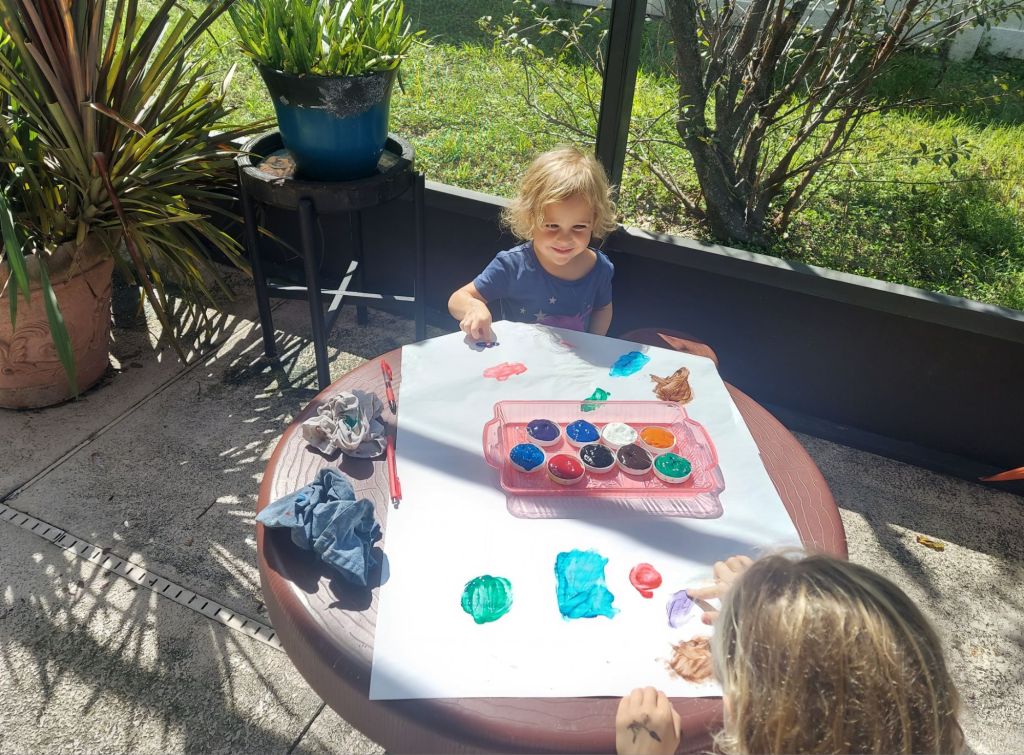
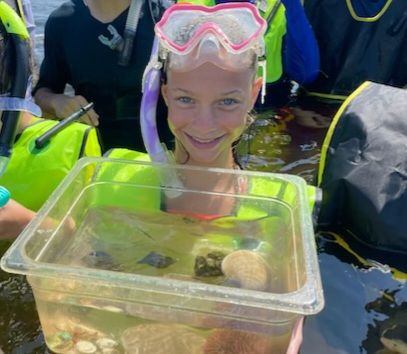
- Encountering the beauty of nature as often as possible, both in large ways (a snorkeling trip or fishing day) and in small ones (nature sketching in the back yard or a daily walk around the block)
In Conclusion
Education encompasses the whole of life. It is not simply a set of rubrics and skills to check off and then move on. Education is a formation of a human person and his or her encounter with the reality of the world. This formation occurs whether or not the educators realize it is taking place.
These three stepping stones – life, leisure, and love – are far more important for that formation than any typical subject my kids will learn in school. They are the guideposts that will lead our children to what is most important, regardless of the specific path they take: living a happy, fulfilled life, and knowing they found the way intended just for them.

Leave a comment