Technically the school year isn’t quite halfway over, but I always feel ready for a bit of a review after the holidays. Today I’ll share how things are going for our kindergartener in the following subjects: Math, Reading, Science, Geography, Art, Music, and PE.
Math
This is my second time using Math-U-See Alpha for kindergarten, and both times have been a success. Here’s a brief snippet about the approach:
Steve Demme (the program’s founder and writer) emphasizes the importance of building a conceptual basis before working on the more minute tasks of memorization. But what makes Math-U-See a great program is that it grounds the concepts in what students can see and touch. The use of manipulatives is fundamental to the program, even in the later years, and is meant to create a deeper understanding of the “why” behind the math problems. And in my experience, it succeeds in this mission.
One thing I will note about the Math-U-See approach is that the materials are black-and-white and simple. I personally prefer this, but I’ve realized through the years that it can become a bit tedious for the kids. So to complement Math-U-See, we also do one day per week of The Good and the Beautiful’s Simply Good and Beautiful Math K. In some ways, the two approaches are opposites, but I’ve found they complement each other…er… beautifully.
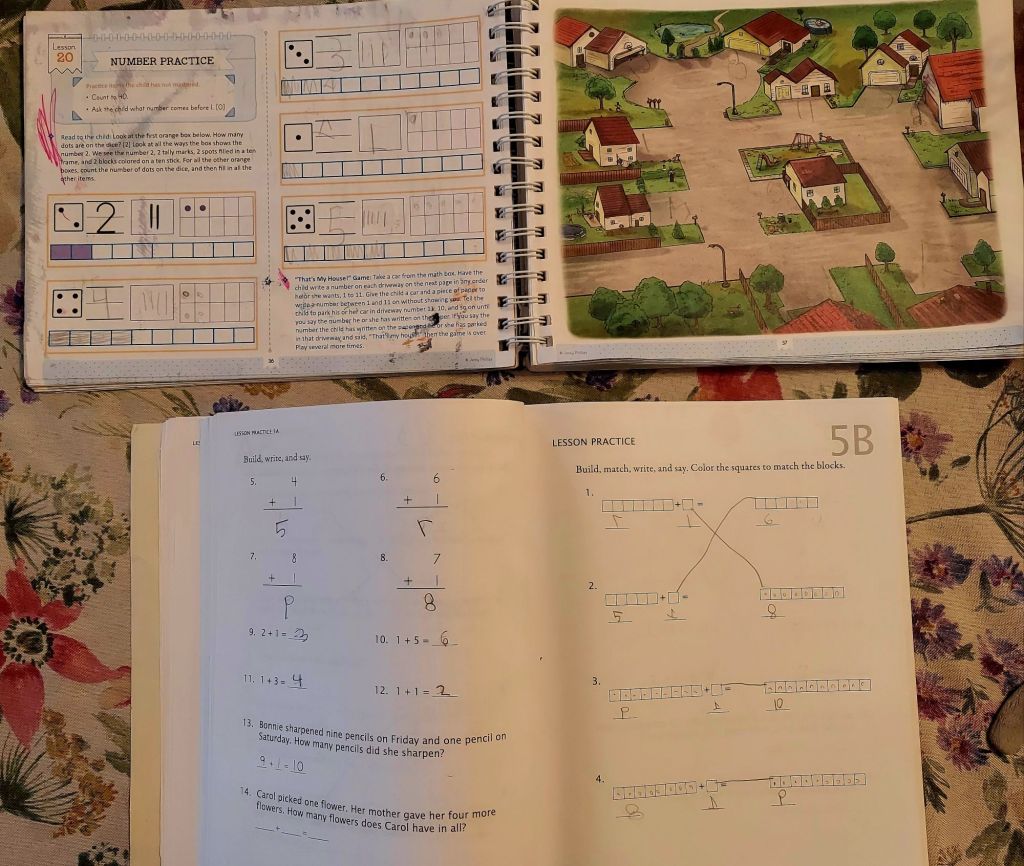
My daughter is enjoying this approach, and aside from one chapter that was bit heavier on the writing than others, I haven’t heard any moaning and groaning. Her math skills have greatly improved, as has her understanding and application of place value, which is central to the curriculum and the Math-U-See approach.
Reading
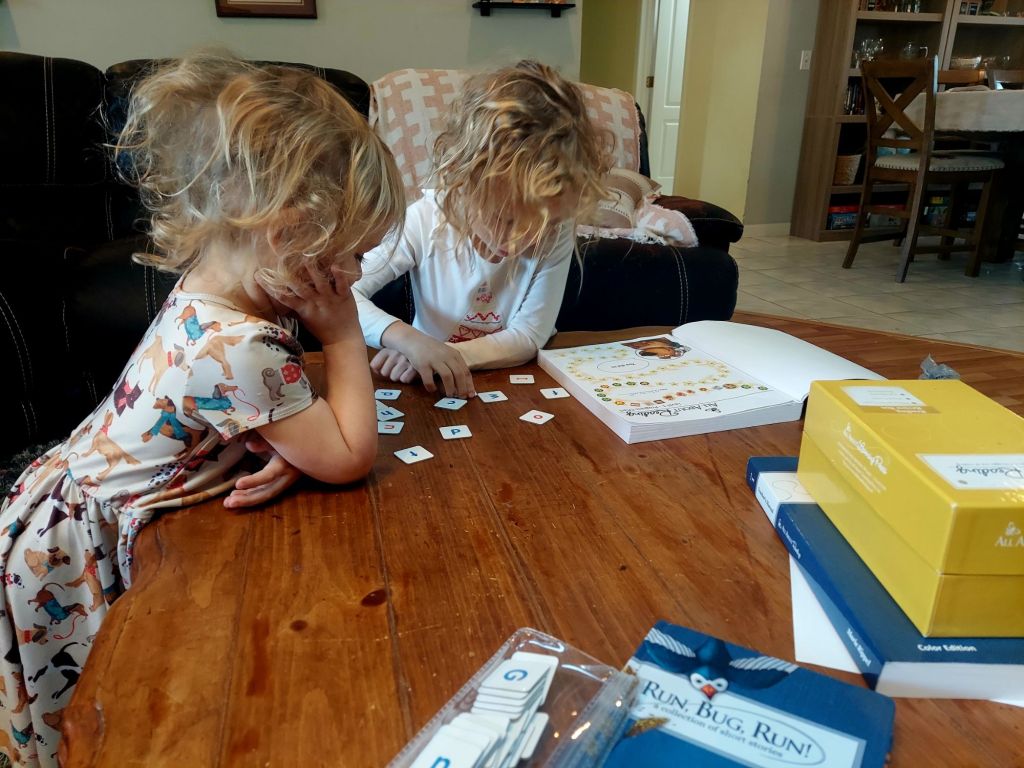
For reading, we are using All About Reading Level 1. This is the second time I’m doing this program with a kindergartener, and it’s been great both times. I love All About Reading’s approach because it’s pretty much open-and-go for the parent, and a good combination of practice and fun for the student. Our lessons never take longer than 20 minutes, and it’s been amazing to see my daughter start reading in just a matter of months!
All About Reading Level 1 covers letter sounds for A-Z, as well as consonant teams TH, SH, CH, CK, NG, and NK. Once you get to the consonant teams, things start moving quickly, which is very exciting! We begin each lesson with a review of the phonogram flash cards, then some extra practice with letter tiles if she seems to need it. From there, we move into the lesson. The lessons alternate between teaching a new letter or consonant team and reading a story that utilizes the new material.
While we’ve enjoyed most of the activities, we usually don’t do all of them, but that’s mostly because she’s catching onto the material quickly so far. If your child is struggling with a concept, the book has lots of options for extra practice, games, and other activities to present the material in different ways. Although I’ve only done this program with two kids, I’ve already noticed how differently they both learn, and I think All About Reading does a great job appealing to all learning styles.
One note – All About Reading has a placement test on its website, and if your child doesn’t know his or her letter names, it might tell you to begin with Pre-Reading. However, neither of my kids who have used this program have been great with letter names, and they both excelled with Level 1. For some reason it seemed much easier for them to learn the sounds of the letters than the names. I still have to remind my daughter of the names sometimes, but the sounds came easily. So just keep this in mind if you’re trying to decide which level to use!
Science
Math and Reading are our most formal subjects at this age, and those rarely take more than an hour per day to complete. We also only do them three or four days per week. The rest of the subjects are done with my daughter’s brother, who is in third grade. I don’t make her do any of the written work, but we read the material together and do narration instead.
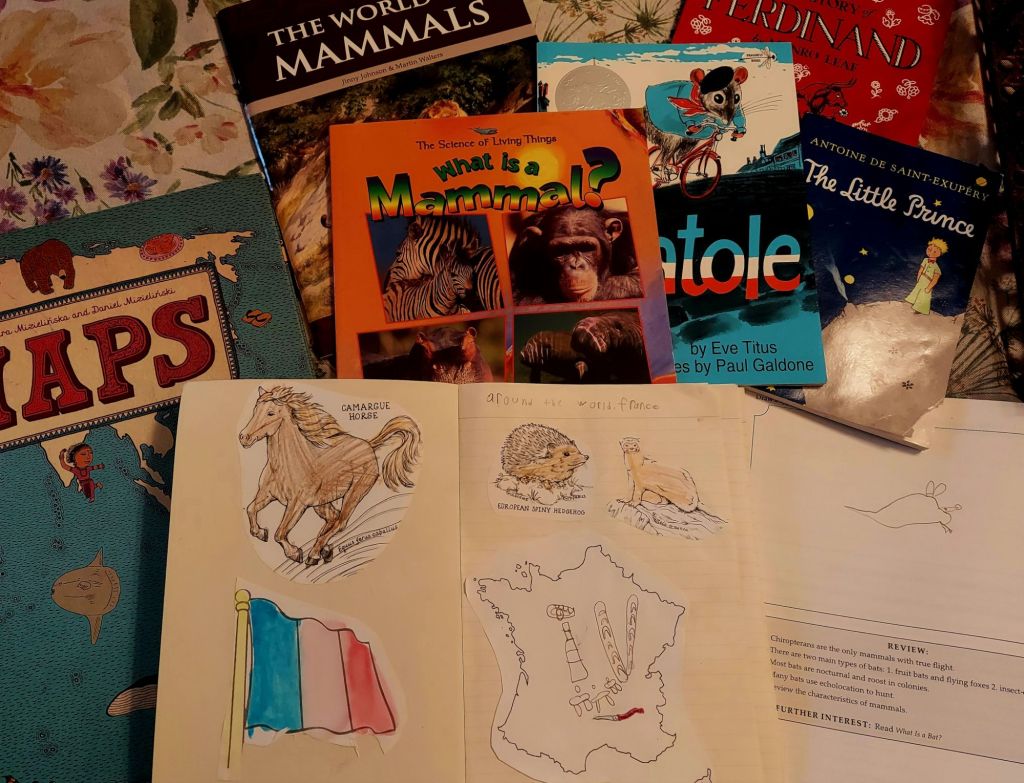
I find Memoria Press’s science materials to be a great fit for this approach. This year, my daughter is following along with their Mammals curriculum for her science, and it’s been so much fun. We do science two days per week.
- On the first day, we read a new lesson all together, then watch some videos of whatever animal we’re learning about. The videos aren’t included in the curriculum, so I usually just find a few beforehand. This takes maybe 20 minutes total. At that point, my kindergartener is free to go, while my third grader does a page of written work that accompanies the lesson.
- Day two is drawing day! The kids get their colored pencils out and draw their animals in their workbooks. These are great keepsakes to look back on years later.
I also like to have books and games on hand that are relevant to the subject matter, so the kids can flip through them during their free time. At the end of the year, to celebrate their hard work, we have a field trip to the zoo planned.
Geography
I love Beautiful Feet Books and have been using their programs for four years now. Three years ago, we completed “Around the World With Picture Books, Part One,” so now we’re doing Part Two. We only did this class one day per week, and we started late in the semester, so we’ve been moving slowly, but we’re increasing the frequency to two days per week this semester.
Beautiful Feet Books takes a Charlotte Mason approach to learning. I love their reading lists as well as their inclusion of art, literature, geography, science, and even cooking. Here’s a summary of their vision, from the BFB website:
Our Vision: To help homeschooling parents ignite wonder and connect with their kids through the best stories and guided lessons. To accomplish this vision, we create K-12 homeschool curriculum for history, geography, and science. Our Charlotte Mason-inspired literature-based curriculum and award-winning teacher’s guides help parents fulfill their desire to read the best books, foster a curiosity-driven learning environment, and develop deep relationships with their kids.
Nilsine has loved keeping a notebook in this class, and we’ve loved the read-aloud approach. This is another class that her little sister often sits in on – and even her older siblings!
(PS: They have a free Inauguration Day Guide you can download here.)
Art, Music, PE
We didn’t do a formal art curriculum first semester but plan to add in some art history this spring. Her science and geography involve a lot of drawing, and we set aside an hour or so of free time each week for art time.
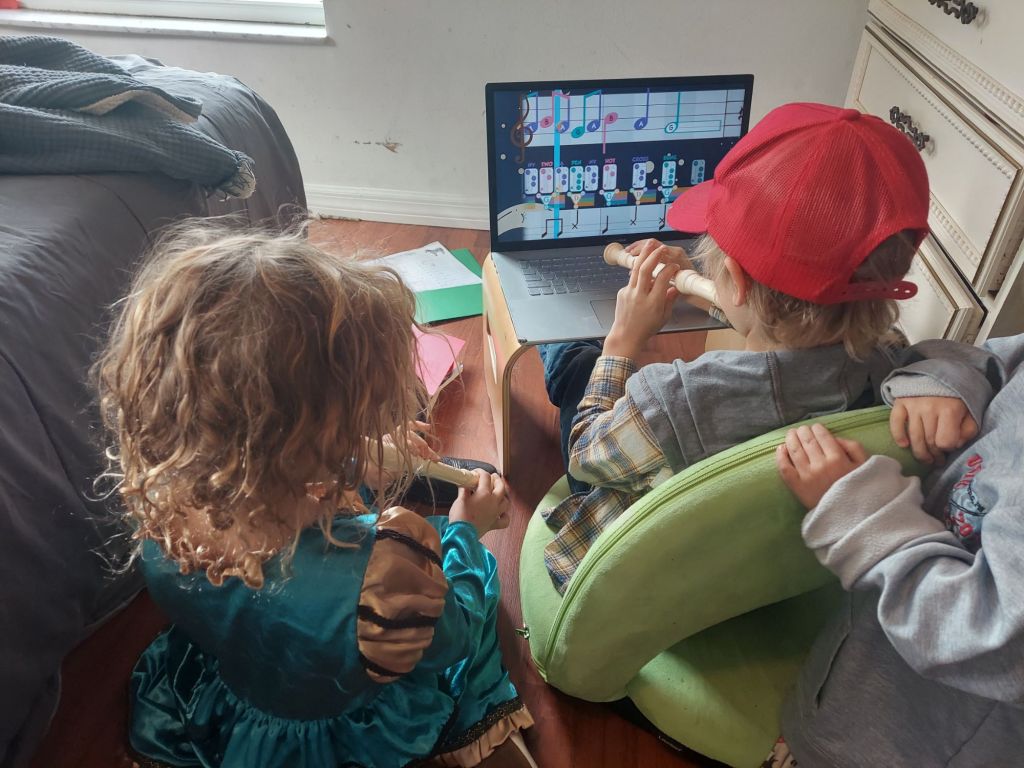
For music class, we’ve been using Recorder Prodigies for grades K-3. At first, I resisted the recorders for reasons of maintaining parental sanity, but we finally caved and got them to teach the kids music theory basics. It’s been surprisingly wonderful, and we’ve enjoyed some beautiful recorder concerts over the last few weeks.
For PE, she takes a weekly class at our homeschool co-op, as well as Highland dance and swimming lessons. Her push-ups and sprinting put me to shame, so I’m not too worried about progress on the PE front!
In Conclusion
I love kindergarten and find a little instruction goes a long way, as long as you’re consistent. I’m looking forward to adding in a few more lessons this spring semester and will report on how they go later in June.
Stay posted for my next post on our third grader’s curriculum this year, and please share your kindergarten favorites in the comments below!

Leave a comment