Physical training has always been an important part of our homeschooling. While our children are talented dancers and athletes, we never want to relinquish their physical development to one specialized arena, whether that’s dance, baseball, football, cross country, or other sports. It’s important to us that they have diverse and well-rounded athletic ability, not just sport-specific skill.
As a middle school and high school teacher at both charter and private schools, I was regularly shocked by the average lack of athleticism in the majority of students. Even “jocks” who might have some sport-specific skills lacked fundamental mobility, flexibility, and even strength. Sometimes I would have students do crawling exercises or games to break up the school day, other times we would run, or I would have them attempt squats with their toes up against a wall. It was shocking how difficult these challenges were for the students.
The sad truth is, as many kids enter later chapters of childhood, they lose the natural grace they have in their early years. This lack of movement fluency can also negatively influence their confidence and focus.
Here are some basic guidelines that we follow in our own children’s homeschool training plans:
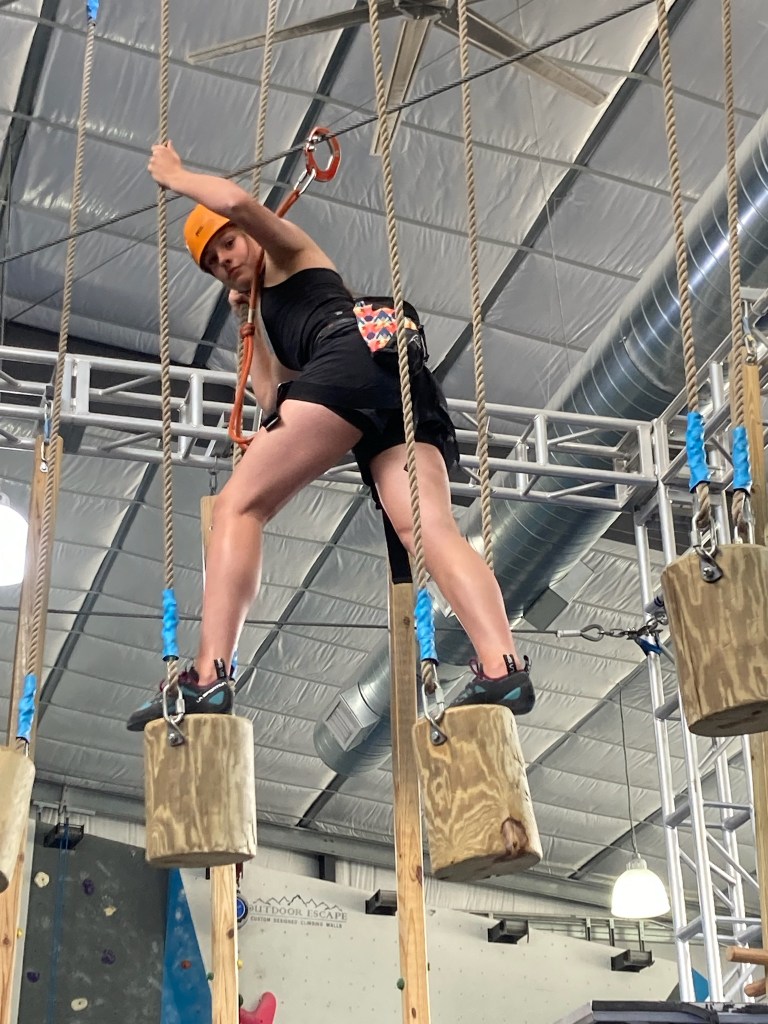
1. Physical training is for everyone
We are physical beings, and while we all have different gifts and backgrounds, we all need to grow and thrive physically. Physical training looks different for a toddler than for a teenager, but there’s no age where physical development is not an important area for improvement.
Some kids have different physical abilities than others. That’s totally normal, but we try to be careful not to pigeon-hole kids as “athletic” or “not athletic.” PE is a great opportunity for all kids to get in touch with their inner athlete, the part of them that wants to challenge themselves and push beyond physical and mental obstacles.
2. Physical training is epic (but not punishing)!
So many of us have a dysfunctional relationship with “working out”. For adults it often has to do with weight and body image. We view training as something miserable or punishing you do in order to look good in a bathing suit. This is an unhealthy attitude for a young person (not to mention adult) to have.
Instead, movement, exercise, and training should be something we love. We try to encourage our kids to get excited to become stronger, faster, and more athletic. The best way to cultivate this sort of attitude in a young person is to create excitement around the epic nature of their training. “We are going to do something amazing!” should be the tone, rather than, “We have to do this because we have to check ‘PE’ off the checklist.”
Kids need to have a defined goal. They also need to know they’re following a plan that’s helping them to reach that goal. For instance, an awesome goal might be to enter and complete a 5k race in 4 weeks. In order to confidently prepare for the race, the child should follow a run-walk program 3 days per week over the course of 4 weeks. Completing this goal should be celebrated as an epic accomplishment!
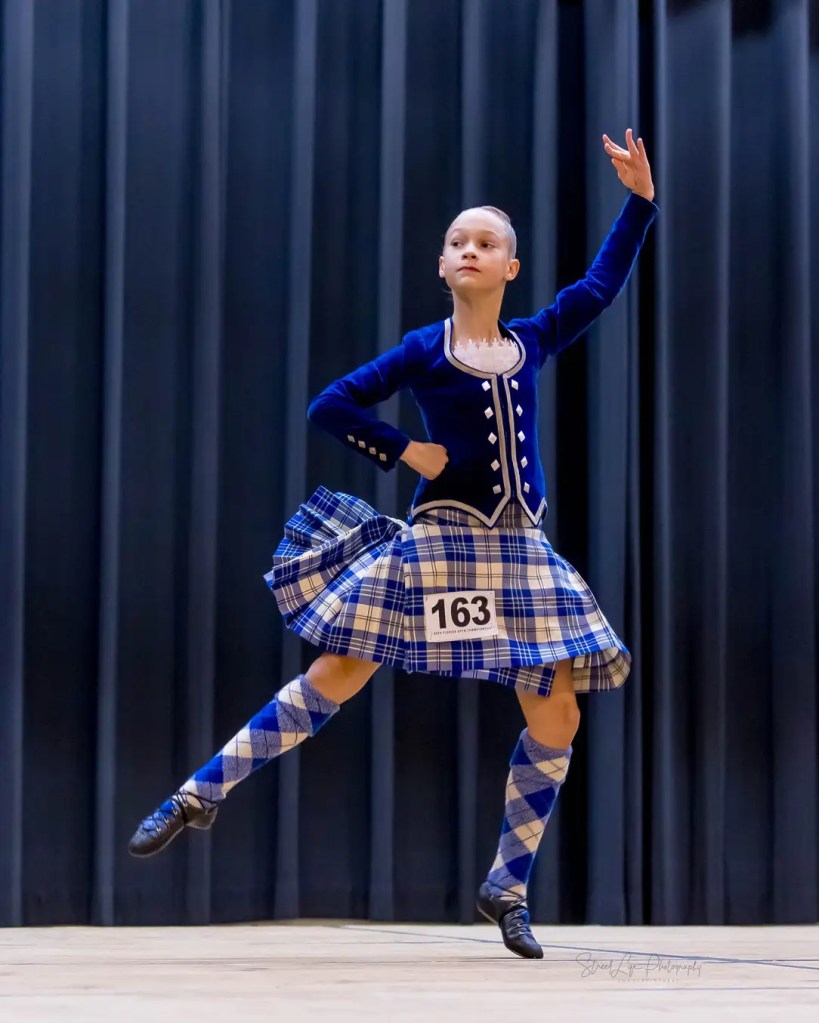
3. Physical training is not just sports
Our kids have gained a lot from sports and dance, and we could go on and on about the valuable lessons that various extracurriculars have offered them. But PE can not be replaced by sports.
Physical education programs at schools have been in rapid decline over the last several decades. Where PE programs remain, the emphasis is often sports skills. Sports are wonderful for kids to engage in, but they generally involve specialized movements that presuppose a basic foundation of physical fitness.
The goal of PE is not to become better at sports (although that will be a pleasant side effect). The goal is to become happier humans.
4. Physical training is also emotional and mental
Our culture has a tendency to compartmentalize the physical and the mental, but any great athlete will tell you that their training is a deep emotional and mental practice. Some of the greatest gifts our children have enjoyed from their training plans have been emotional grit and better focus.
Studies also support the benefits of physical activity for focus and attention. For example, a 2022 study on the benefits of exercise for children with ADHD came to the following conclusion:
Appropriate exercise intervention can not only augment the sensorimotor skills but also increase self-confidence and improve communication and social interaction skills in children. Exercise is an important tool for children with ADHD in the developmental phase. Aerobic exercise or perceptual motor training is beneficial to children with ADHD. Both single-bout and long-term exercises can improve the blood flow to the brain, enhance information processing capacity and attention, decrease impulsiveness, and increase inhibitory control, thereby improving interpersonal relationships. With regard to exercise prescription, planned and combined exercise courses should be selected, and the contents should emphasize exercise intensity and perceptual motor exercises combined with cognitive tasks (such as motor planning skills). The teaching plan should include game content.
With this in mind, ask yourself what mental and emotional goals you have for your child, and create PE plans that foster that growth through physical challenge. For example, a child who struggles with negative self-talk in school might receive an almost immediate confidence boost from a physical activity that is easy to track progress in, such as completing a HIIT workout in a new record time or seeing the numbers increase in a strength training session.
5. Physical training is a habit
Ideally, regular physical training should be ingrained in a child. In our family, we strive for this habitual training in two ways: First, we have a careful and well thought-out plan that we follow consistently. Second, we look for opportunities to move spontaneously. Our kids love a challenge and are pretty competitive, so we like to capitalize on that by giving them different challenges, like testing how long we can each do a wall handstand or seeing who can hold the longest plank.
Now that we have a pool, we spend hours swimming and playing games in the water as a family. We also enjoy walks to the rec center where we play tennis, swim laps, or work out in the gym with the older kids. We also encourage the kids to take regular movement breaks during the day so they’re not sitting for hours on end.
In addition to a more structured approach, look for opportunities to be playfully moving all the time. Remind your kids that they need to be strong not just for athletic pursuits, but also for life.

6. Physical training is well rounded and non-specialized
The purpose of physical education is foundational. This is not a time for honing specialized skills but to become a physical generalist who has good fundamental strength, power, endurance, mobility, and flexibility. PE plans should be well-rounded and incorporate all these different areas.
Everyone has areas where they tend to shine and others where they tend to struggle. The tough truth is that the kid who just wants to lift weights should probably work on their flexibility and endurance, and the kid who just wants to run should probably lift iron.
We always trend towards our natural strengths, but the goal of PE is not to become an ultramarathon racing champion or a powerlifting mensch. The goal is to be a better human: strong, fast, flexible, and able to sustain effort over the long haul.
7. Physical training is for you, too!
Over the years, we’ve had a lot of fun working out with our kids. There’s a special camaraderie that develops when you work together to accomplish a training goal. Right now we’re all training for a sprint triathlon next year, and hope to run a few races in the coming months.
It’s easy as homeschooling parents to relegate PE to the kid realm. But it’s so much more rewarding and fruitful for everyone when it’s a family venture, not an individual pursuit.
At the end of the day, the greatest lesson your children will ever learn is the model that you, as their parent, provide them. You are the living lesson of your children – the most powerful lesson they will ever learn.

Leave a comment