Some of my most beautiful memories as a child are of fishing with my dad. Fishing has almost always been taught through oral tradition – passed down from parent to child. I’ve had friends who loved fishing and then realized one day that their kids had never learned to fish or didn’t enjoy it. It’s important to go early and often with your children if you want to pass on the love of fishing.
Even if you were never taught to fish, and you don’t really know what you’re doing, there’s no better way to learn something than to teach it! (Stay tuned for a future post on how to get started fishing with your kids if you’re just learning yourself.)
For those of us who did grow up fishing, there can still be some frustrations in passing on our angling passion. Kids have a lot of energy and limited focus, which can be challenging since the primary virtue of fishing is patience!
Here are 5 things I keep in mind when I’m taking my kids fishing:
1. Instill a spirit of wonder
The famous author of the Little Prince, Antoine de Saint-Exupery, once wrote, “If you want to build a ship, don’t drum up the men to gather wood, divide the work, and give orders. Instead, teach them to yearn for the vast and endless sea.” If you’re the adventurous sort, you know that logistics are 95% of adventures, but the logistics aren’t the reason we go on the adventure.
Children need to be given a reason to love fishing so they’ll want to figure out all of the skills and planning. Once your kids have caught the bug, you can introduce them to the logistical side of things, but in the beginning, kids need to experience the why.
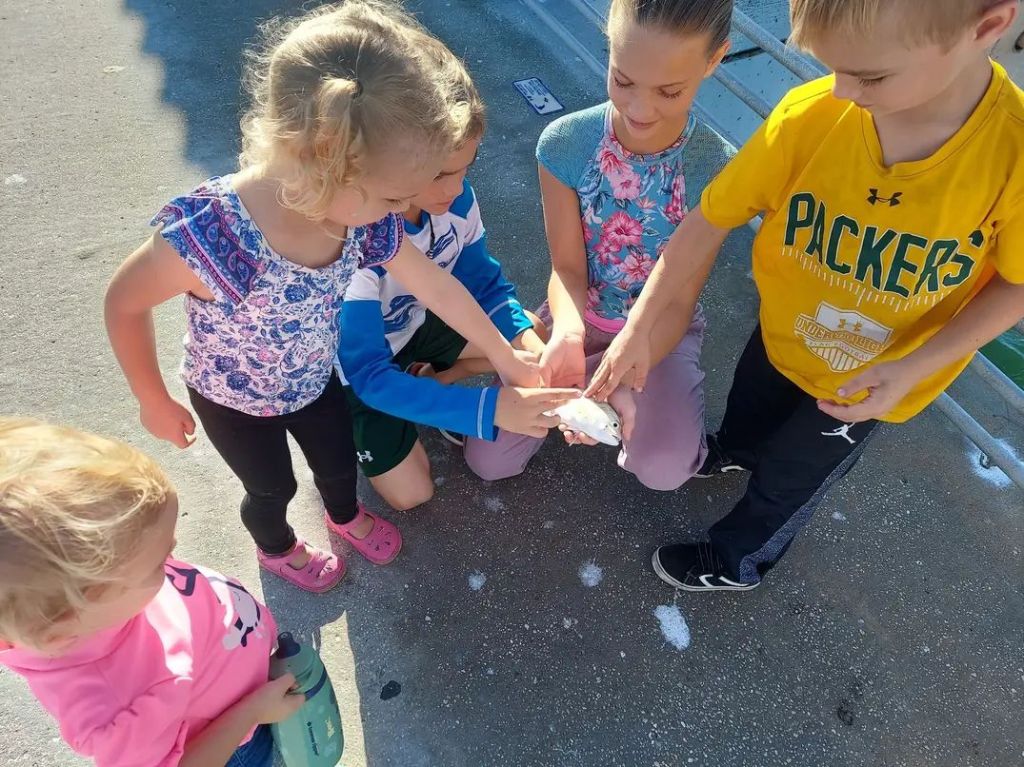
How do you help foster wonder in your children when you are going fishing? Tell them stories about your own fishing exploits, about how you learned to fish, about things that you saw on the water – even the tall tales about the one that got away. When you’re out on the water, bring their attention to what is going on in nature around them. When you catch a fish, show your child to be respectful and humane towards the animal, whether you release the fish or plan to keep it for food. When we are respectful of nature and the animals we interact with, this respect creates appreciation.
Fish are amazing, and the environments in which they live are beautiful and mysterious worlds. When we go fishing, we make certain predictions about a world that’s invisible to us. When we’re able to do this successfully, it’s an amazing feeling!
Going on outdoor adventures should be an opportunity for a child to enter into the rhythm and the language of the natural world. Kids love nature and her patterns, so look for opportunities to nourish this instinct in them.
2. Remember kids learn through imitation
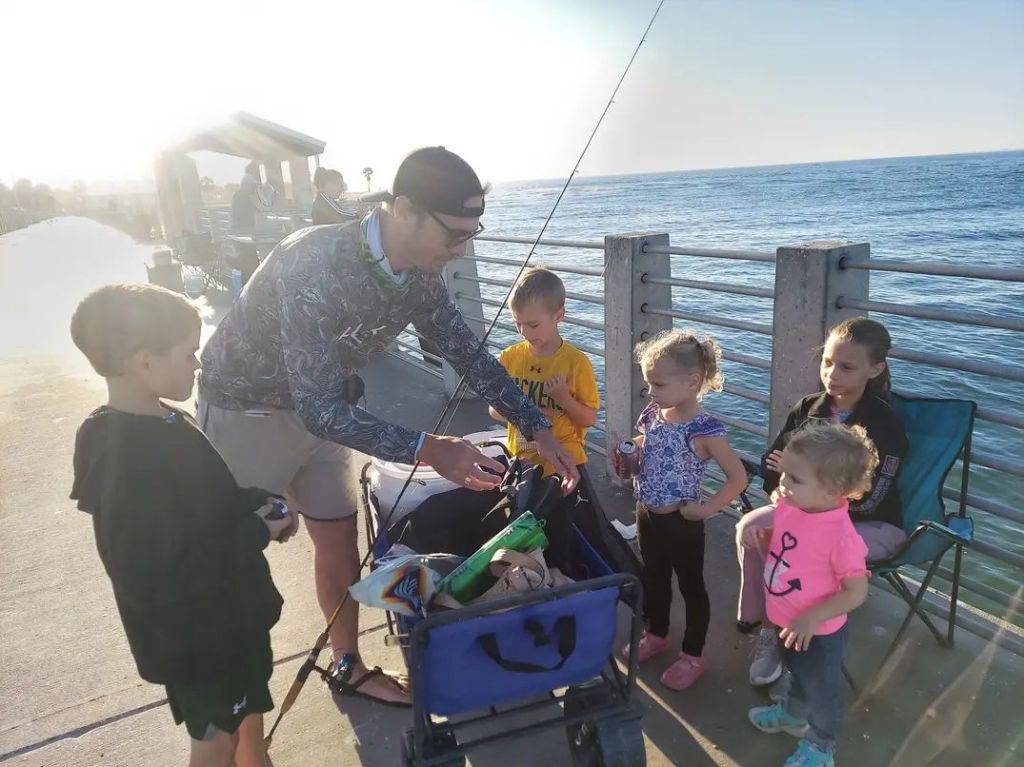
The most powerful way in which a child learns is through imitation. In other words, they learn by looking at you. If you want your children to love fishing, you must love fishing. So relax and fish!
This may be an unpopular perspective, but I think it’s better for you to take your children along on your fishing ventures rather than on trips that are fully catered to their level and abilities. Let your children watch you fish, and invite them to join in as they can. Unless something has gone wrong, your child wants to be like you. There will be no more compelling motivation for them to fish than to see the joy and excitement you take in your own fishing.
3. Keep it simple and have clear goals
One of the beauties of fishing is that it can be as simple or as complicated as you make it. You can catch fish and do a great deal with rudimentary gear, and you can spend a lifetime mastering the angling art. When it comes to teaching children to fish, simple is best. Fishing from the bank, for example, may be easier than fishing from a boat.
Some species of fish are also more accessible to a young angler. I can almost guarantee a successful day of fishing catfish and bluegill but may not always be able to predict success for bass or flounder. Know what you are trying to accomplish on the water, and only take the gear you need so that your fishing is leisurely.
4. Use common sense fishing gear
Here’s a common pattern I have observed: parents take their kids to the fishing store and buy them a Mickey Mouse rod with a push button reel and a tackle box with a bunch of cheap tackle. The subsequent fishing trip is a story of mounting frustration as dad spends the whole time untangling that useless reel as the kid wanders off bored.
Those pushbutton kid rod reel combos are almost always junk. While these kid-marketed set ups may be attractive to a child, in my experience they lead to frustration. (Adults are even more guilty of falling into this trap. How often are lures designed to catch fishermen rather than fish?) We should help children identify common sense fishing gear that works. A spincast reel may be a little tricky for a kid to learn how to cast, but it’s certainly something they can learn to do
When I take a younger child fishing we are generally using bait. This involves far less casting than lures, and often with a younger child I will cast for them, and then they can hold the rod and reel in when a fish bites.
(Stay tuned for a future post dedicated to kid-friendly gear.)
5. Let them make mistakes
Parents generally want to solve all of their kid’s problems for them. While this can appear to be helpful, the truth is that we learn far more by wrestling with problems than by being handed easy solutions. If you see your child making a mistake, restrain your instinct to correct them right away. Let them try to figure things out for themselves. If they struggle with the problem for a bit, they’ll be better able to understand the answer once you give it to them. If they do figure things out for themselves, that’s even more valuable. In all humility, I have often seen my children make what were in my mind obvious mistakes that ended up working!
At the end of the day, teaching your child to fish will be a beautiful opportunity for you to learn as well. Good luck!

Leave a comment